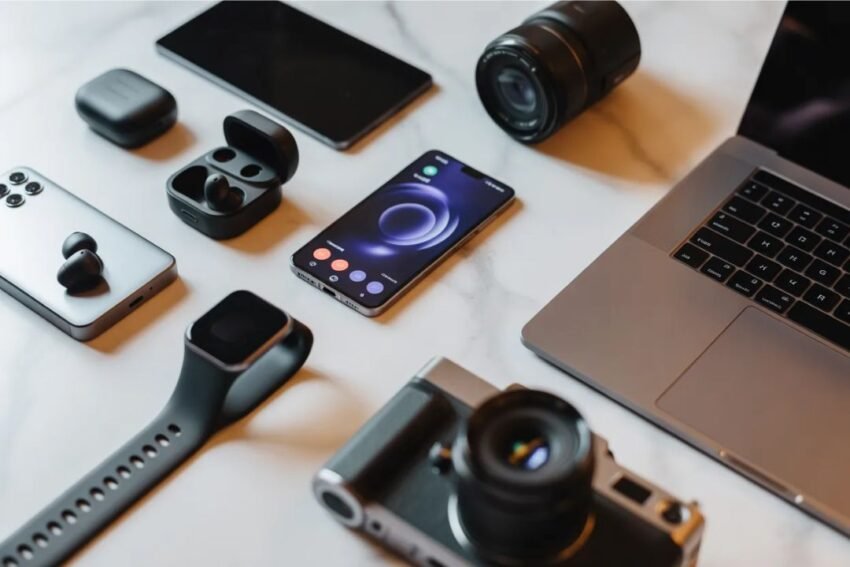
Artificial Intelligence has inspired a new wave of tech gadgets promising to transform how we live, work, and interact with the world. From pocket‑sized AI assistants to smart wearable devices, the hype around AI gadgets has been huge over the last couple of years. But as we reach 2026, a big question remains:
👉 Are these smart AI devices truly worth buying — or just overhyped tech?
Below is a comprehensive, honest review of the latest AI gadgets, what’s working, what’s not, and whether you should spend your money on them.
🧠 What Are AI Gadgets?
AI gadgets are tech devices that use artificial intelligence to perform tasks such as voice interaction, task automation, voice assistants, smart data interpretation, real‑time translation, and more — separate from traditional smartphones or computers.
Examples include wearable AI assistants, AI projectors, voice‑controlled devices, smart home assistants, and futuristic accessories.
The idea behind these is that they’ll offload repetitive digital tasks, make everyday life easier, and act as personalized helpers — without always needing a phone or laptop.
🔍 Have AI Gadgets Lived Up to the Hype?
Despite early excitement and big promises, real‑world reviews have been mixed — and in some cases very negative.
❌ Major Early Failures
Humane AI Pin – Once hyped as a wearable that could replace smartphones, it became one of the most criticized AI gadgets ever. Many reviewers called it unreliable, slow, and lacking real usefulness — especially compared to existing phones. Ultimately, the company shut down the product and left many buyers stuck with essentially useless hardware.
Multiple tech outlets noted that the device often couldn’t perform basic tasks like setting alarms or calendars, and its laser projection was hard to read in real‑world lighting conditions.
Similarly, Rabbit R1, another AI pocket assistant, was widely considered underwhelming at best and wasted potential at worst. Early launches demonstrated limited functionality — reportedly little different from what apps on a smartphone could already do — leading many tech reviewers and users to dismiss it as unnecessary hardware.
Bottom line: Devices that promised to replace your phone with a standalone AI experience did not live up to expectations.
👍 AI Gadgets Still Worth Considering
Not all AI gadgets have failed. Some categories of devices have shown real value, especially those integrated into everyday tech that already serves another purpose.
✅ AI in Smart Home Devices
AI‑powered hubs, smart speakers, and control systems are widely recognized as useful and worth buying. Many modern smart devices automatically optimize settings, anticipate user behavior, and integrate with daily systems more effectively than older smart speakers.
Examples:
- AI‑enabled smart speakers that control home lights, security systems, and appliances
- AI predictive assistants in smart thermostats and hubs
- Devices that learn your habits and automate routines
These usually work well because they enhance devices you already use every day rather than trying to replace core technology like your phone.
✅ AI Translation & Productivity Devices
Some gadgets that focus on practical use cases — like real‑time language translation — are proving their worth. For instance, high‑accuracy earbuds with built‑in AI translation can break language barriers in real time, which is valuable for frequent travelers or business users.
These types of devices deliver functionality that:
✔ Solves a real everyday problem
✔ Has clear value beyond what phones already do
✔ Doesn’t require a subscription to be useful
This is a good rule of thumb: devices that add meaningful capabilities beyond what your smartphone already offers are far more likely to be worth buying.
🧪 Why Some AI Gadgets Failed
There are a few common reasons why many early AI gadgets didn’t catch on:
❗1. Smartphones Already Do Most Tasks Better
Most AI gadgets tried to be independent replacements for smartphones or apps — something many tech reviewers and users saw as redundant because phones already integrate advanced AI features (e.g., voice assistants, real‑time translation, smart automation).
❗2. Poor Practical Implementation
Devices like some early AI assistants suffered from limited battery life, overheating, slow responsiveness, and awkward designs — meaning they weren’t enjoyable or practical to use.
❗3. High Price + Low Utility
Many early AI gadgets carried premium prices with ongoing subscription fees, yet provided no unique advantages over existing technology — leading many reviewers and owners to reconsider whether they were worth the cost.
📈 Devices That Are Worth Considering in 2026
Here’s where AI gadgets are earning praise:
🔹 Smart Home Assistants
AI‑driven hubs and assistants that automate daily routines, adjust lighting, control appliances, and optimize energy consumption.
🔹 AI‑Enhanced Wearables
Devices like smart rings or glasses that supplement smartphone capabilities (e.g., health tracking, discreet information prompts).
🔹 AI Productivity Tools
Gadgets aimed at professionals — like AI meeting companions, advanced transcription tools, and translation earbuds — that clearly reduce work effort and save time.
🔹 AI Security Devices
Home security systems with in‑built AI that recognizes patterns, detects anomalies, and enhances privacy protection.
🧠 Final Verdict: Are New AI Devices Worth Buying?
It depends on what you want and how you plan to use them.
✔ Yes — Worth Buying When:
✔ The gadget enhances or complements your existing devices
✔ It solves a real problem that your phone or computer can’t handle well
✔ It’s priced reasonably based on its usefulness
(Examples: smart home AI hubs, translation earbuds, productivity automators.)
❌ Not Worth Buying When:
❌ The device tries to replace your phone but delivers inferior performance
❌ It requires expensive subscriptions for basic features
❌ It’s overhyped without solving a real everyday need
(Examples: early standalone AI assistants that failed to replace phones.)
📌 Tips Before You Buy Any AI Gadget
✅ Read real user reviews before purchasing — marketing hype usually overestimates usefulness.
✅ Check for ongoing support — some devices lose functionality if updates stop.
✅ Avoid early launches for unproven products until the second or third generation.
✅ Consider how it fits into your everyday life — the best devices seamlessly improve workflows or routines.
Conclusion
AI gadgets promise a future where technology is more intuitive, personalized, and helpful than ever before. However, 2026 shows us that not all of these products are worth your money right now — especially those trying to replace devices we already carry every day.
The smart AI devices that are actually worth buying in 2026 tend to be those that:
✔ Solve specific real‑world problems
✔ Integrate smoothly with existing tech
✔ Offer clear value beyond a novelty
Buyers should be selective and informed, choosing gadgets that genuinely make life easier — not just look futuristic.