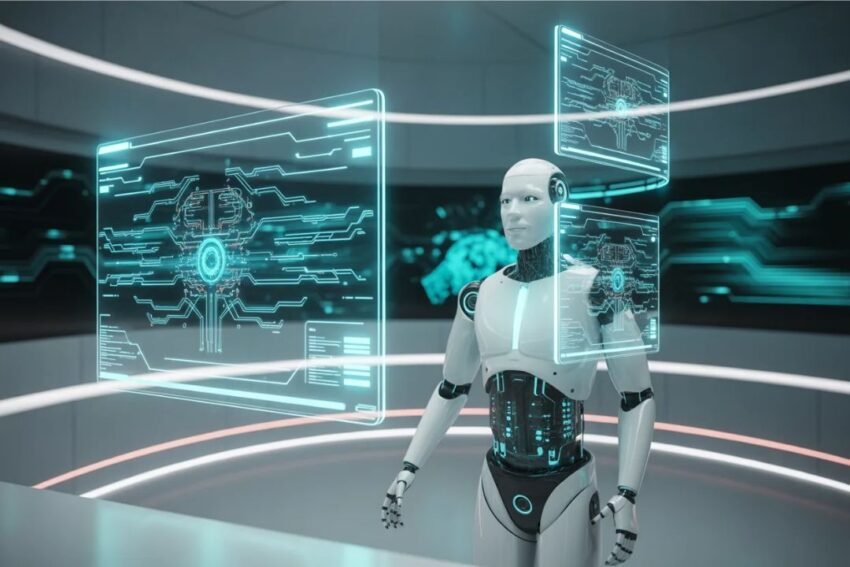
The next decade promises unprecedented technological breakthroughs that will redefine industries, daily life, and global economies. From artificial intelligence and quantum computing to sustainable energy and human-machine interfaces, innovations in the coming years are expected to transform how we work, live, and interact with the world.
This article explores the most promising technology innovations of the next 10 years, their potential applications, and the impact they may have on society.
🔹 1. Advanced Artificial Intelligence (AI)
AI will continue to evolve, becoming more intelligent, autonomous, and integrated across all sectors.
Key Developments:
- Generative AI creating text, images, videos, and code
- AI assistants capable of complex decision-making and multi-tasking
- Predictive AI in healthcare, finance, and manufacturing
- Ethical AI frameworks for responsible deployment
Impact: AI will enhance productivity, creativity, and decision-making while reshaping job roles and workflows globally.
🔹 2. Quantum Computing
Quantum computing will revolutionize industries by solving problems classical computers cannot.
Key Developments:
- Quantum processors with massive computational power
- Quantum-safe encryption to protect sensitive data
- Accelerated research in drug discovery, climate modeling, and material science
Impact: Will enable breakthroughs in science, security, and logistics, solving problems previously considered unsolvable.
🔹 3. Human-Computer Interfaces & Brain-Computer Technology
Direct interfaces between humans and machines will become more advanced, opening new frontiers in productivity, healthcare, and accessibility.
Key Developments:
- Neural implants and brain-computer interfaces for device control
- Wearable sensors for monitoring health and cognitive performance
- AI-driven adaptive user interfaces
Impact: Improves accessibility for differently-abled individuals, enhances human capabilities, and redefines interaction with technology.
🔹 4. Extended Reality (XR) – VR, AR, and Mixed Reality
Immersive technologies will reshape education, entertainment, training, and remote collaboration.
Key Developments:
- Virtual classrooms and corporate training simulations
- AR-enabled shopping and interactive advertising
- Mixed Reality workspaces for remote collaboration
Impact: Offers immersive experiences and makes virtual interactions almost as natural as real-life engagements.
🔹 5. Web3, Blockchain, and Decentralized Systems
Decentralized technologies will change how we store data, transact, and govern digital communities.
Key Developments:
- NFTs and tokenized assets for digital ownership
- Decentralized finance (DeFi) for peer-to-peer financial services
- Blockchain-based identity verification and secure data sharing
Impact: Empowers users with control over digital assets, transparency, and trust in online systems.
🔹 6. Next-Generation Connectivity (5G, 6G, and Beyond)
High-speed networks will enable real-time communication, IoT expansion, and connected smart cities.
Key Developments:
- Ultra-low latency connectivity for AR/VR, autonomous vehicles, and remote work
- Global coverage with satellite internet networks
- Edge computing integration for faster, localized processing
Impact: Facilitates smarter cities, instant data exchange, and seamless digital experiences.
🔹 7. Sustainable & Green Technology
Technological innovation will increasingly align with environmental sustainability.
Key Developments:
- Renewable energy generation and smart grid management
- Energy-efficient AI algorithms and data centers
- Electric and autonomous vehicles reducing carbon emissions
- Carbon tracking and climate monitoring solutions
Impact: Supports global sustainability goals, reduces ecological footprints, and promotes responsible innovation.
🔹 8. Biotechnology and Personalized Medicine
Medical and biotech innovations will redefine healthcare and longevity.
Key Developments:
- Gene editing technologies like CRISPR for disease prevention
- AI-assisted diagnostics and telemedicine
- Lab-grown organs and regenerative therapies
- Personalized medicine tailored to individual genetic profiles
Impact: Improves life expectancy, enhances quality of care, and provides individualized treatment options.
🔹 9. AI-Driven Automation & Robotics
Automation combined with AI will revolutionize industries, logistics, and everyday life.
Key Developments:
- Autonomous delivery drones and self-driving vehicles
- Smart manufacturing and robotic workforce solutions
- AI-powered personal assistants for home and office
- Intelligent supply chain management
Impact: Reduces costs, increases efficiency, and allows humans to focus on higher-value, creative work.
🔹 10. Cybersecurity & Privacy Technologies
As digital ecosystems expand, advanced cybersecurity innovations will become essential.
Key Developments:
- AI-powered threat detection and prevention
- Quantum-safe encryption standards
- Privacy-enhancing technologies for data protection
- Behavioral analytics to identify anomalies and prevent breaches
Impact: Protects critical infrastructure, personal data, and ensures trust in digital environments.
🔹 Conclusion
The next 10 years (2026–2036) promise a fusion of AI, quantum computing, immersive experiences, biotechnology, and sustainable innovations that will transform every aspect of human life. Businesses, educators, governments, and individuals who adapt early and embrace these technologies will lead the way in shaping a smarter, more connected, and sustainable world.
Pro Tip: To prepare for the future, focus on learning AI and automation tools, explore immersive technologies like AR/VR, and keep track of sustainable tech trends. Early adoption will provide a significant advantage in both professional and personal life.