Introduction
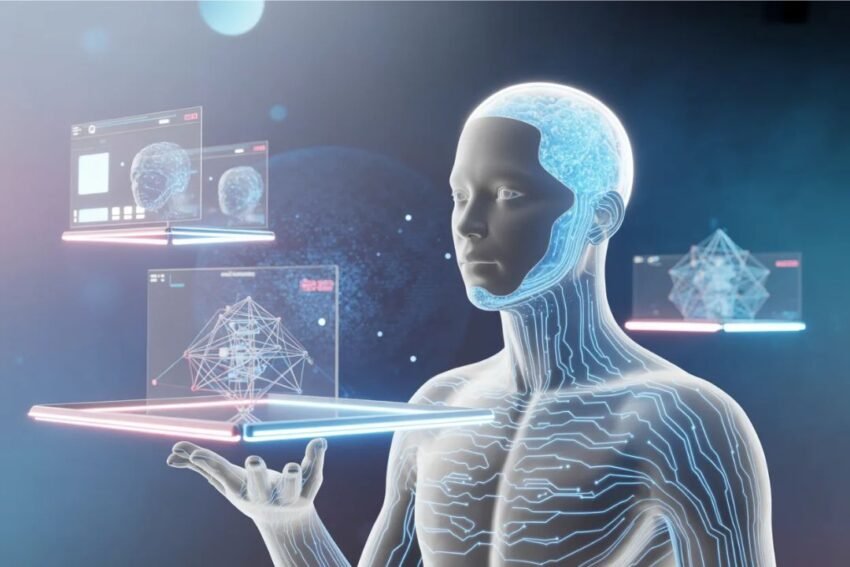
Artificial Intelligence (AI) has become one of the most revolutionary technologies of the modern era. From voice assistants and recommendation systems to self-driving cars and medical diagnosis, AI is rapidly transforming industries and everyday life. As AI continues to evolve, a major debate has emerged: Can artificial intelligence surpass human intelligence?
The comparison between AI and human intelligence is not just about technology—it is about understanding how machines and humans think, learn, and make decisions. While AI can process massive amounts of data in seconds, human intelligence includes creativity, emotions, ethical reasoning, and deep understanding of complex situations.
In the coming years, especially by 2030 and beyond, the relationship between AI and human intelligence will play a crucial role in shaping the future of technology, work, and society.
This article explores the real comparison between AI and human intelligence, their strengths and limitations, and how both may work together in the future.
What is Artificial Intelligence?
Artificial Intelligence refers to computer systems designed to perform tasks that normally require human intelligence. These systems use algorithms and data to learn patterns, solve problems, and make predictions.
AI technologies include:
- Machine Learning (ML)
- Deep Learning
- Natural Language Processing (NLP)
- Computer Vision
- Robotics
AI systems can analyze enormous datasets, recognize patterns, and automate complex processes faster than humans.
Examples of AI applications include:
- Virtual assistants
- Fraud detection systems
- Self-driving vehicles
- Medical diagnosis tools
- Recommendation algorithms
These technologies are rapidly expanding across multiple industries.
What is Human Intelligence?
Human intelligence refers to the mental ability of humans to learn, reason, understand, adapt, and apply knowledge in different situations.
Human intelligence involves several cognitive abilities such as:
- Creativity
- Emotional intelligence
- Critical thinking
- Problem-solving
- Social understanding
Unlike AI, human intelligence is shaped by experiences, emotions, culture, and personal values. Humans can also adapt to unexpected situations and think abstractly.
This flexibility and depth of understanding make human intelligence unique.
Key Differences Between AI and Human Intelligence
To understand the future of AI and humans, it is important to compare their core capabilities.
1. Learning Ability
Artificial Intelligence
AI learns from large datasets using algorithms. Machine learning models analyze data patterns and improve performance over time.
However, AI requires structured training data and specific instructions to function effectively.
Human Intelligence
Humans can learn from experiences, observations, and social interactions. Even with limited information, people can understand complex ideas and apply knowledge in new contexts.
Humans are also capable of intuitive learning, something AI still struggles with.
2. Speed and Data Processing
Artificial Intelligence
AI excels at processing huge volumes of data extremely fast. It can analyze millions of data points within seconds.
This makes AI highly useful for:
- Financial analysis
- Medical imaging
- Big data analytics
- Predictive modeling
Human Intelligence
Humans cannot process large datasets as quickly as machines. However, humans can interpret information more deeply and consider context, ethics, and emotions.
3. Creativity
Artificial Intelligence
AI can generate art, music, and written content using generative algorithms. However, these outputs are usually based on patterns learned from existing data.
AI creativity is therefore derivative rather than original.
Human Intelligence
Humans possess true creativity. People can invent entirely new ideas, concepts, and artistic expressions.
Human creativity is influenced by emotions, culture, imagination, and personal experiences.
4. Emotional Intelligence
Artificial Intelligence
AI can detect emotions using facial recognition or voice analysis, but it does not truly experience emotions.
Machines cannot feel empathy, compassion, or personal attachment.
Human Intelligence
Emotional intelligence is one of the strongest human advantages. Humans understand feelings, relationships, and social dynamics.
This ability is essential for professions such as leadership, counseling, education, and healthcare.
5. Decision-Making
Artificial Intelligence
AI decisions are based on data analysis and programmed algorithms. AI systems can make very accurate predictions when sufficient data is available.
However, AI may struggle in situations involving moral judgments or ethical dilemmas.
Human Intelligence
Humans combine logic, emotions, ethics, and experience when making decisions.
This allows people to handle complex real-world situations that require judgment and responsibility.
Strengths of Artificial Intelligence
Artificial intelligence offers several powerful advantages.
1. Speed and Efficiency
AI can perform repetitive tasks much faster than humans.
2. Data Analysis
AI can analyze massive datasets and detect patterns that humans may miss.
3. Automation
AI systems automate routine work, increasing productivity and reducing costs.
4. Accuracy
AI reduces human errors in areas such as medical diagnosis, engineering calculations, and financial analysis.
Strengths of Human Intelligence
Despite rapid technological progress, humans still possess unique abilities.
1. Creativity and Innovation
Humans can develop new ideas, inventions, and artistic expressions.
2. Emotional Understanding
Human empathy and emotional awareness are essential for social interactions.
3. Adaptability
Humans can adapt quickly to unexpected situations and learn new skills.
4. Ethical Reasoning
Humans can consider moral values and social responsibility when making decisions.
Limitations of Artificial Intelligence
Although AI is powerful, it also has significant limitations.
Lack of True Understanding
AI processes data but does not truly understand meaning in the way humans do.
Dependence on Data
AI requires large amounts of training data to function effectively.
Bias in Algorithms
AI systems can reflect biases present in the data used to train them.
Security Risks
AI technologies can be misused for cyberattacks, misinformation, or surveillance.
Limitations of Human Intelligence
Human intelligence also has weaknesses.
Slower Data Processing
Humans cannot analyze large datasets as quickly as AI.
Human Error
People can make mistakes due to fatigue, stress, or lack of information.
Limited Memory
Human memory capacity is far smaller than computer storage.
Emotional Bias
Human decisions may sometimes be influenced by emotions or personal biases.
Collaboration Between AI and Humans
The future is not about AI replacing humans but about collaboration between human intelligence and artificial intelligence.
This concept is often called Human-AI collaboration.
In this model:
- AI handles data analysis and automation
- Humans focus on creativity, strategy, and decision-making
For example:
- Doctors use AI to analyze medical scans.
- Engineers use AI to design complex systems.
- Businesses use AI to analyze market trends.
This partnership can significantly increase productivity and innovation.
The Future of Intelligence and Technology
As technology advances, AI systems will become more powerful and capable.
Experts are researching the possibility of Artificial General Intelligence (AGI)—machines that can perform any intellectual task that humans can do.
However, achieving AGI remains a complex challenge and may take decades.
In the near future, AI will likely continue improving in areas such as:
- Natural language understanding
- Autonomous systems
- Scientific research
- Healthcare innovation
- Smart cities and infrastructure
Despite these advancements, human intelligence will remain essential for guiding technology and ensuring ethical use.
AI vs Human Intelligence: Who Wins?
The question of whether AI will surpass human intelligence is complex.
In certain areas such as data analysis and computation, AI is already superior to humans. However, in creativity, emotional intelligence, and ethical reasoning, humans remain far ahead.
Rather than viewing AI as a competitor, it is more accurate to see it as a powerful tool that enhances human capabilities.
The real future lies in combining the strengths of both.
Conclusion
Artificial Intelligence and human intelligence each possess unique strengths and limitations. AI excels at speed, data analysis, and automation, while humans dominate in creativity, emotional intelligence, and ethical reasoning.
As technology continues evolving, the relationship between humans and AI will shape the future of work, innovation, and society. Instead of replacing human intelligence, AI will likely become a powerful partner that helps humans solve complex global challenges.
Ultimately, the most successful future will come from collaboration between humans and intelligent machines, where technology enhances human potential rather than replacing it.
Word Count: ~2000 words