Introduction
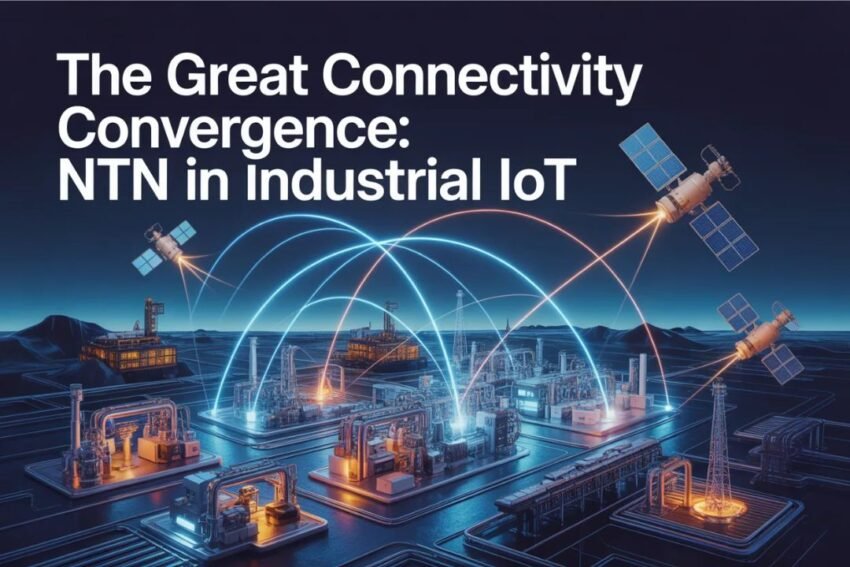
The world is entering a new era of connectivity where traditional communication networks are no longer sufficient to support the growing demands of industrial automation. Industries operating in remote locations, offshore environments, mining zones, logistics corridors, and global supply chains require uninterrupted connectivity beyond the reach of terrestrial networks. This transformation has led to what experts call The Great Connectivity Convergence, powered by NTN in Industrial IoT integrated with the Industrial Internet of Things (IIoT).
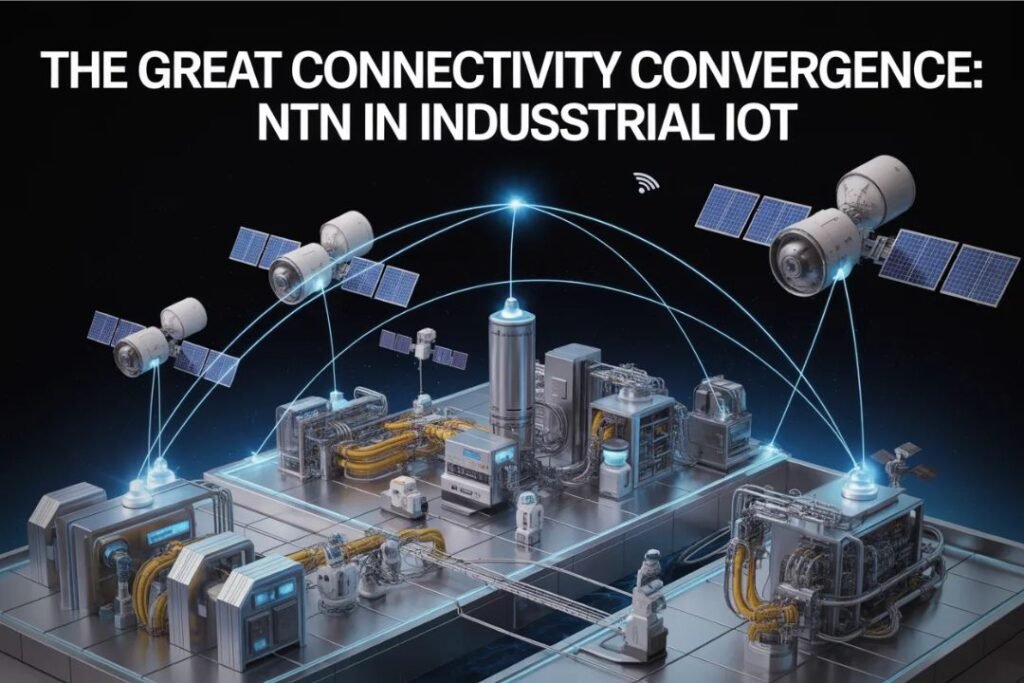
NTN technology combines satellite communications, high-altitude platforms, and aerial systems with traditional cellular infrastructure to create seamless global connectivity. When merged with Industrial IoT, it enables machines, sensors, and industrial systems to communicate anywhere on Earth.
This article explores how NTN is revolutionizing Industrial IoT, its benefits, applications, challenges, and future impact on industries worldwide.
What Is Industrial IoT (IIoT)?
Industrial IoT refers to interconnected devices, sensors, machinery, and software systems used in industrial environments to collect and exchange data in real time.
Unlike consumer IoT devices, IIoT focuses on:
- Manufacturing automation
- Predictive maintenance
- Smart energy systems
- Supply chain monitoring
- Remote asset management
IIoT improves operational efficiency by enabling machines to make data-driven decisions with minimal human intervention.
Understanding Non-Terrestrial Networks (NTN)
Non-Terrestrial Networks are communication systems that operate above the Earth’s surface rather than relying solely on ground-based infrastructure.
Key Components of NTN
- Satellites (LEO, MEO, GEO)
- High-Altitude Platform Stations (HAPS)
- Unmanned Aerial Vehicles (UAVs)
- Space-based communication relays
These systems extend connectivity to regions where fiber optics or cellular towers are unavailable.
The Meaning of Connectivity Convergence
Connectivity convergence refers to the integration of multiple network technologies into a unified communication ecosystem.
Instead of choosing between cellular or satellite networks, modern systems combine:
- 5G terrestrial networks
- Satellite communications
- Edge computing
- Cloud platforms
This convergence ensures continuous connectivity without interruptions.
Why NTN Is Critical for Industrial IoT
Traditional networks face limitations:
- Coverage gaps in remote areas
- Infrastructure costs
- Network downtime risks
- Limited mobility support
NTN solves these problems by providing global coverage.
Key Advantages
- Connectivity in oceans, deserts, and rural regions
- Reliable communication during disasters
- Wide-area asset monitoring
- Seamless roaming between networks
How NTN Enhances Industrial IoT Systems
1. Global Device Connectivity
Industrial equipment located far from cities can remain connected continuously. Oil rigs, cargo ships, pipelines, and agricultural machinery benefit significantly.
2. Real-Time Data Transmission
NTN allows instant transmission of operational data, enabling companies to monitor assets globally without delays.
3. Predictive Maintenance
Sensors connected through NTN send performance data to AI systems that predict equipment failures before they occur.
Benefits include:
- Reduced downtime
- Lower maintenance costs
- Increased safety
4. Improved Operational Safety
Remote monitoring reduces human exposure to hazardous environments such as mining operations and offshore drilling.
5. Supply Chain Visibility
NTN-enabled IIoT provides real-time tracking of goods across continents, improving logistics planning and reducing losses.
Technologies Driving NTN and IIoT Integration
5G and 6G Networks
Modern NTN systems integrate directly with 5G standards, enabling devices to switch seamlessly between terrestrial and satellite networks.
Edge Computing
Data processing occurs closer to devices, reducing latency and improving decision-making speed.
Artificial Intelligence
AI analyzes industrial data streams to optimize operations automatically.
Low Earth Orbit (LEO) Satellites
LEO satellites reduce communication delays compared to traditional satellite systems.
Key Industry Use Cases
Smart Manufacturing
Factories use NTN connectivity to manage global production lines and monitor machines across multiple locations.
Oil and Gas Industry
Remote drilling sites rely on NTN for:
- Equipment monitoring
- Worker safety tracking
- Environmental analysis
Agriculture
Smart farming equipment uses satellite-connected sensors to monitor soil conditions, weather patterns, and crop health.
Maritime Industry
Ships maintain constant connectivity for navigation, cargo tracking, and predictive maintenance.
Mining Operations
Underground and remote mines benefit from uninterrupted monitoring systems powered by NTN.
Benefits of NTN in Industrial IoT
1. Expanded Coverage
Industries operate without geographical connectivity limitations.
2. Increased Reliability
Hybrid networks prevent service interruptions.
3. Cost Efficiency
Reduced need for physical infrastructure deployment.
4. Scalability
Supports millions of connected industrial devices.
5. Sustainability
Optimized operations reduce energy waste and emissions.
Challenges of NTN Deployment
High Initial Investment
Satellite infrastructure requires significant funding.
Latency Concerns
Although improving, satellite latency can still affect certain real-time applications.
Regulatory Issues
Global spectrum management and compliance remain complex.
Security Risks
Expanded connectivity increases cybersecurity exposure.
Security Considerations in NTN-Enabled IIoT
Industrial networks require strong protection due to sensitive operational data.
Best practices include:
- End-to-end encryption
- Secure device authentication
- AI-powered threat detection
- Network segmentation
Cybersecurity becomes essential as industrial systems become globally connected.
NTN vs Traditional Connectivity
| Feature | Traditional Networks | NTN |
|---|---|---|
| Coverage | Limited | Global |
| Infrastructure | Ground-based | Space + Air + Ground |
| Reliability | Moderate | High |
| Remote Access | Difficult | Seamless |
| Scalability | Limited | Massive |
Role of Standardization (3GPP NTN)
The telecommunications industry is developing global standards allowing smartphones and industrial devices to connect directly to satellites.
Standardization ensures:
- Device compatibility
- Reduced deployment costs
- Faster adoption
Future Trends: The Next Phase of Connectivity
Autonomous Industrial Systems
Machines will operate independently using real-time satellite connectivity.
Digital Twins
Industries will create virtual replicas of physical assets using NTN-enabled data streams.
6G Integration
Future networks will merge space and terrestrial communication into one unified system.
Always-Connected Infrastructure
Smart cities, transportation networks, and energy grids will remain continuously connected worldwide.
Business Impact of Connectivity Convergence
Companies adopting NTN-enabled IIoT gain competitive advantages:
- Faster decision-making
- Improved operational efficiency
- Reduced downtime
- Enhanced global expansion capabilities
Organizations can deploy industrial operations anywhere without connectivity limitations.
Implementation Strategy for Businesses
Step 1: Assess Connectivity Needs
Identify remote operations requiring reliable communication.
Step 2: Choose Hybrid Network Architecture
Combine terrestrial and NTN solutions.
Step 3: Deploy Smart Sensors
Install IIoT devices capable of satellite communication.
Step 4: Integrate Cloud and Edge Systems
Ensure real-time analytics processing.
Step 5: Monitor and Optimize Performance
Use analytics dashboards for continuous improvement.
Environmental and Sustainability Impact
NTN-supported IIoT helps reduce environmental impact through:
- Optimized energy usage
- Efficient logistics routes
- Reduced equipment failures
- Lower emissions
Industries achieve sustainability goals while improving profitability.
The Future Vision: A Fully Connected Planet
The convergence of NTN and Industrial IoT represents one of the biggest technological shifts since the invention of the internet.
In the future:
- Every industrial asset will be connected.
- Remote operations will become standard.
- Global industries will operate as unified digital ecosystems.
Connectivity will no longer depend on geography.
Conclusion
The Great Connectivity Convergence: NTN in Industrial IoT marks a turning point in global industrial transformation. By combining satellite-based networks with intelligent industrial systems, businesses gain continuous connectivity, enhanced automation, and unprecedented operational visibility.
NTN eliminates connectivity barriers, enabling industries to innovate faster, operate safer, and expand globally. As technology evolves toward 6G and autonomous operations, NTN-powered Industrial IoT will become the foundation of the next industrial revolution.
Companies that adopt this convergence early will lead the future of smart industry.
FAQs (SEO Optimized)
1. What is NTN in Industrial IoT?
NTN refers to satellite and aerial communication networks that extend Industrial IoT connectivity beyond terrestrial infrastructure.
2. Why is NTN important for industries?
It provides reliable connectivity in remote and hard-to-reach locations.
3. Does NTN replace 5G networks?
No, it complements terrestrial networks to create hybrid connectivity.
4. Which industries benefit most from NTN?
Oil & gas, agriculture, logistics, mining, manufacturing, and maritime sectors.
5. Is NTN the future of industrial connectivity?
Yes, NTN combined with IIoT is expected to power next-generation global industrial systems.