Introduction
Artificial Intelligence (AI) is rapidly transforming the global workforce and redefining how people work. From automating routine tasks to creating entirely new career opportunities, AI is reshaping industries and forcing workers to adapt to new digital skills. In recent years, businesses across sectors—including technology, healthcare, finance, manufacturing, and education—have adopted AI-powered tools to improve productivity and decision-making.
The rise of generative AI, machine learning, and automation technologies has accelerated the pace of workplace change. As companies integrate AI into their operations, employees must learn new digital competencies to stay relevant in the evolving job market.
Research shows that AI is significantly impacting productivity and job demand. Industries that heavily use AI have experienced a dramatic increase in productivity growth, while workers with AI-related skills can earn up to 56% higher wages compared to those without such skills. (PwC)
This article explores how artificial intelligence is transforming jobs, the digital skills needed for the future, emerging career opportunities, and how professionals can prepare for the AI-driven workplace.
The Rise of Artificial Intelligence in the Workplace
Over the past decade, artificial intelligence has moved from experimental technology to a core component of modern business operations. Companies now use AI systems to analyze data, automate repetitive processes, enhance customer experiences, and support decision-making.
Organizations are increasingly relying on technologies such as:
- Machine learning
- Natural language processing
- Robotic process automation
- Generative AI tools
- Predictive analytics
These technologies allow businesses to operate more efficiently while reducing manual workloads. As a result, the traditional structure of many jobs is changing.
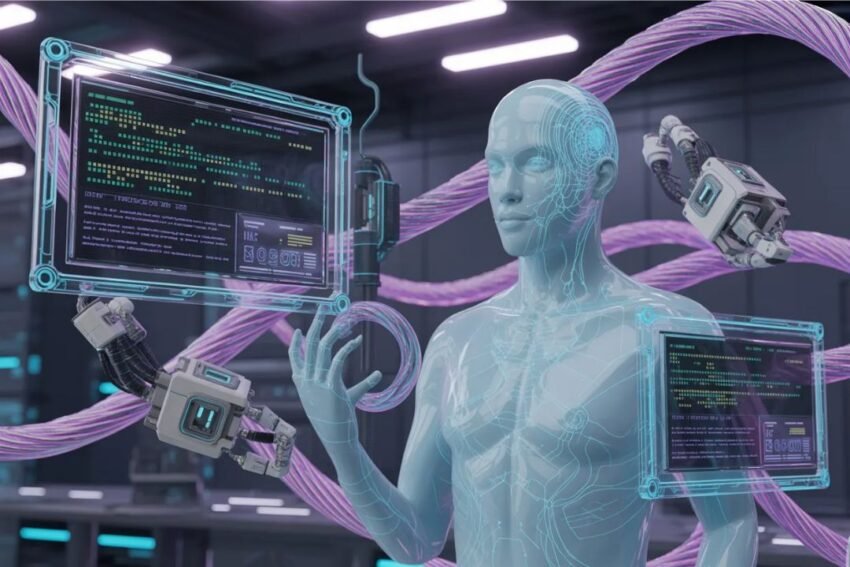
AI is not just replacing tasks—it is reshaping how work is performed. Workers are increasingly collaborating with intelligent systems to complete complex tasks faster and more accurately.
How AI is Changing the Nature of Jobs
Artificial intelligence is transforming jobs in three main ways: automation, augmentation, and job creation.
1. Automation of Repetitive Tasks
One of the most noticeable effects of AI is the automation of repetitive and routine work. Tasks such as data entry, scheduling, report generation, and customer support can now be handled by AI-powered systems.
Examples include:
- Chatbots answering customer questions
- AI tools analyzing financial data
- Automated email responses
- Smart scheduling systems
This automation allows businesses to reduce operational costs and increase efficiency.
However, it also means that workers performing routine tasks must develop new skills to remain competitive.
2. AI Augmenting Human Work
While some tasks are automated, AI is also enhancing human capabilities. Instead of replacing workers entirely, many AI systems work alongside humans to improve productivity.
For example:
- Doctors use AI to analyze medical images.
- Marketers use AI to analyze customer behavior.
- Developers use AI coding assistants.
- Financial analysts use AI-powered forecasting tools.
These systems help professionals make better decisions by providing deeper insights from large datasets.
Research suggests that AI’s complementary effect on human skills is stronger than its replacement effect, meaning it often increases demand for workers with the right skills. (arXiv)
3. Creation of New Job Roles
Artificial intelligence is also creating entirely new career opportunities.
Some emerging AI-related roles include:
- AI Engineer
- Machine Learning Specialist
- Data Scientist
- Prompt Engineer
- AI Ethics Specialist
- AI Product Manager
Demand for AI-related roles is growing rapidly. In fact, one report found that global demand for AI training roles increased by more than 280% within a single year, highlighting the explosive growth of AI-driven jobs. (IT Pro)
These new careers require both technical expertise and strong problem-solving skills.
The Growing Importance of Digital Skills
As AI transforms the workplace, digital skills have become more important than ever. Employers now expect workers to understand technology and be able to work alongside AI-powered systems.
Digital skills refer to the ability to use technology effectively for work, communication, and problem-solving.
Some of the most important digital skills include:
- Data analysis
- Artificial intelligence literacy
- Cloud computing
- Cybersecurity awareness
- Programming and coding
- Digital marketing
Workers who possess these skills are more likely to succeed in the modern job market.
Key Digital Skills Needed in the AI Era
To stay competitive in the future workforce, professionals must develop several essential digital skills.
1. Data Literacy
Data has become one of the most valuable assets in modern businesses. Companies rely on data to make strategic decisions, improve products, and understand customer behavior.
Data literacy includes:
- Understanding data trends
- Interpreting analytics dashboards
- Using business intelligence tools
- Making data-driven decisions
Professionals who can analyze and interpret data will have a strong advantage in AI-driven workplaces.
2. AI and Machine Learning Knowledge
Understanding the basics of AI and machine learning is becoming increasingly important for many jobs.
Even non-technical professionals benefit from understanding how AI systems work and how to use them effectively.
Skills include:
- Understanding AI tools
- Writing effective prompts
- Using AI-powered software
- Interpreting AI-generated insights
As AI adoption grows, more workers are actively learning these skills. In fact, people are now more than twice as likely to add AI skills to their profiles compared to a few years ago. (World Economic Forum)
3. Programming and Technical Skills
While not every job requires programming knowledge, coding skills remain highly valuable in the digital economy.
Popular programming languages include:
- Python
- JavaScript
- SQL
- Java
These languages are commonly used in AI development, data analysis, and software engineering.
Technical skills also allow professionals to build automation systems and develop AI applications.
4. Digital Communication and Collaboration
As remote work and digital platforms become more common, communication skills are increasingly important.
Employees must be able to:
- Collaborate through digital platforms
- Present ideas clearly
- Work with global teams
- Manage virtual projects
Strong communication skills help teams work effectively in technology-driven environments.
5. Creativity and Problem-Solving
Interestingly, the rise of AI is increasing the importance of human creativity.
Experts predict that by 2030, 70% of the skills required for most jobs will change, making creativity, curiosity, and strategic thinking essential abilities. (Forbes)
These uniquely human skills allow workers to complement AI systems rather than compete with them.
Industries Most Impacted by AI
Artificial intelligence is affecting nearly every industry, but some sectors are experiencing faster transformation.
Technology Industry
The technology sector is heavily influenced by AI innovation.
Software developers, data scientists, and cybersecurity experts are increasingly using AI tools to improve efficiency and develop new products.
Healthcare
AI is helping healthcare professionals diagnose diseases, analyze medical images, and develop personalized treatment plans.
AI-driven medical technologies are improving patient outcomes and reducing healthcare costs.
Finance and Banking
Financial institutions use AI for:
- Fraud detection
- Risk assessment
- Algorithmic trading
- Customer service automation
These systems help banks process massive amounts of financial data quickly.
Marketing and Digital Media
Marketing professionals rely on AI to analyze customer behavior and personalize marketing campaigns.
AI tools can generate content, predict trends, and optimize advertising strategies.
Education
AI-powered learning platforms are transforming education by providing personalized learning experiences.
Students can now receive tailored lessons based on their strengths and weaknesses.
Challenges of AI in the Workforce
Despite its benefits, AI also presents several challenges.
Job Displacement
Automation may replace certain jobs, especially those involving repetitive tasks.
Some companies have already begun restructuring workforces as they transition toward AI-focused operations. (The Guardian)
Skills Gap
Many workers lack the digital skills needed to work with AI systems.
Businesses and governments must invest in education and training programs to close this gap.
Ethical Concerns
AI systems can raise ethical issues related to:
- Data privacy
- Algorithmic bias
- Surveillance
- Decision transparency
Responsible AI development is essential to address these concerns.
Preparing for the AI-Driven Future
To succeed in an AI-powered world, workers must embrace continuous learning.
Strategies for Future Success
- Learn AI and digital technologies
- Develop strong problem-solving abilities
- Focus on creativity and innovation
- Stay updated with technological trends
- Invest in lifelong learning
Upskilling and reskilling will become critical as technology continues evolving.
The Future of Work with AI
Artificial intelligence will continue transforming the global workforce in the coming years. Instead of eliminating jobs entirely, AI will reshape roles and create new opportunities for workers with the right skills.
Workers who combine technical knowledge, digital literacy, and human creativity will thrive in the AI era.
The future workplace will likely involve close collaboration between humans and intelligent machines, allowing people to focus on higher-level thinking, innovation, and strategic decision-making.
Conclusion
Artificial intelligence is fundamentally transforming jobs and digital skills across industries. While automation may replace certain routine tasks, it is also creating new career opportunities and increasing demand for workers with advanced digital skills.
To remain competitive in the evolving job market, professionals must embrace continuous learning and develop expertise in areas such as data analysis, AI literacy, programming, and digital communication.
Ultimately, the future of work will not be about humans competing with AI—but about humans working alongside intelligent machines to achieve greater productivity, creativity, and innovation.
Word Count: ~2000 words