Introduction
Technology has changed the way people communicate, work, learn, shop, and entertain themselves. From smartphones to artificial intelligence, modern innovations continue to make everyday activities easier and more interactive. One technology that is gaining attention across different industries is Augmented Reality (AR). It allows people to experience digital content while still seeing the real world around them.
Augmented Reality is no longer just an idea found in science fiction movies. Today, people can use it through smartphones, tablets, smart glasses, and other digital devices. Whether someone wants to see how a sofa will look in their living room, learn about the human body, or explore a virtual character in a real environment, AR makes these experiences possible.
As digital technology continues to develop, Augmented Reality is creating new opportunities for businesses, educators, healthcare professionals, and ordinary users. Understanding how this technology works and where it can be used helps explain why it has become such an important part of the modern digital world.
What Is Augmented Reality?
Augmented Reality is a technology that adds digital elements to a person’s view of the physical environment. These elements may include images, animations, text, sounds, or three-dimensional objects. Instead of replacing the real world, AR adds useful digital information to it.
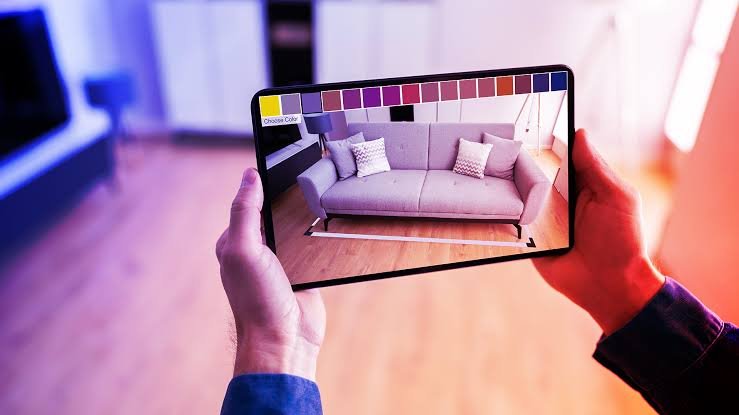
For example, imagine pointing your smartphone camera toward an empty corner of your room and seeing a virtual chair placed there on the screen. You can move around, change the chair’s position, and check whether it matches your interior design. The chair is not physically present, but the technology makes it appear as though it belongs in the room.
This is a simple example of how AR connects digital information with real surroundings. It can help people understand information more clearly because they can see how digital objects relate to their actual environment.
Augmented Reality is different from Virtual Reality (VR). Virtual Reality usually places users inside a completely digital environment, often through a headset. AR, on the other hand, keeps users connected to the physical world while adding computer-generated elements to their view.
How Does Augmented Reality Work?
Augmented Reality combines several technologies to create an interactive experience. Although some AR systems are more advanced than others, most follow a similar process.
First, a device uses a camera or another sensor to observe the surrounding environment. The system then processes information about the user’s position, nearby objects, surfaces, and movements. Specialized software uses this information to determine where digital content should appear.
Next, the system displays digital elements in the appropriate position. These elements may remain attached to a particular surface or move according to the user’s viewpoint. More advanced systems can also respond to gestures, voice commands, and physical movement.
For example, an AR application designed for furniture shopping may recognize the floor in a room. It can then place a virtual table on that surface and adjust its appearance as the user moves the phone.
Modern AR systems may use computer vision, motion sensors, depth sensors, and artificial intelligence to improve accuracy. However, the exact technologies depend on the device and application being used.
The main purpose is to create a natural connection between the physical environment and digital information.
Common Applications of Augmented Reality
One reason Augmented Reality has attracted so much interest is its flexibility. It can be used in many situations, from simple mobile games to complex industrial tasks.
1. Augmented Reality in Education
Education is one of the areas where AR can make learning more engaging. Traditional teaching methods often depend on textbooks, diagrams, and verbal explanations. Although these methods remain valuable, some subjects are easier to understand when students can visualize the information.
AR applications can display three-dimensional models of planets, historical buildings, animals, and scientific objects. Students studying biology, for instance, may explore a digital model of the human heart and examine its different parts.
This interactive approach can make complicated topics easier to understand. It may also encourage students to participate more actively in lessons.
Teachers can use AR to develop classroom activities that combine observation, exploration, and problem-solving. However, technology works best when it supports good teaching rather than replacing teachers or basic learning methods.
2. Augmented Reality in Healthcare
Healthcare professionals need accurate information to diagnose conditions, educate patients, and perform medical procedures. Augmented Reality can support these activities by displaying useful digital information alongside the real environment.
Medical students may use AR to study anatomy through interactive three-dimensional models. Instead of relying entirely on printed illustrations, they can explore the relationships between organs, muscles, and bones.
In some clinical and surgical settings, specialized AR systems can help professionals visualize medical information or guidance while performing tasks. This may improve their understanding of complex procedures when the technology is appropriately designed and validated.
AR can also support patient education. A healthcare professional might use a visual model to explain how a particular body part works or how a treatment is intended to help.
Nevertheless, medical applications require careful testing, strong privacy protections, and professional oversight. AR should not be treated as a substitute for qualified medical judgment.
3. Augmented Reality in Shopping and Retail
Online shopping is convenient, but customers cannot always judge the size, appearance, or suitability of a product from photographs alone. Augmented Reality helps address this problem by allowing shoppers to preview certain products in their own surroundings.
Furniture retailers, for example, may offer AR tools that let customers place virtual sofas, tables, or beds inside their homes. Customers can compare designs and see whether an item fits their available space before purchasing it.
Beauty and fashion brands also use AR for virtual try-on experiences. Shoppers may preview makeup shades, glasses, or selected accessories through a smartphone camera.
These features can make shopping more interactive and help customers make informed decisions. Businesses may also benefit from improved customer engagement and fewer purchases made because of incorrect expectations.
However, virtual previews are not always perfectly accurate. Lighting, screen quality, product dimensions, and camera performance can affect the final experience.
4. Augmented Reality in Gaming and Entertainment
Gaming has played an important role in introducing AR to a wider audience. Unlike traditional games that take place entirely on a screen, AR games can incorporate elements of the player’s surroundings.
A game might place virtual creatures in a park, display interactive objects on a table, or turn a room into part of a digital adventure. These experiences combine physical movement with digital interaction.
Beyond gaming, AR can also improve entertainment at live events, museums, exhibitions, and tourist attractions. Visitors may point their devices toward an exhibit to reveal additional information, animations, or historical scenes.
This combination of entertainment and exploration can make ordinary places more engaging. It also gives creators new ways to tell stories and connect with audiences.
5. Augmented Reality in Manufacturing and Industry
Industrial environments often involve complicated equipment, detailed instructions, and tasks that require precision. Augmented Reality can help workers access information without repeatedly looking away from the equipment they are handling.
For example, an AR system may display assembly instructions over the relevant parts of a machine. Maintenance workers might use visual guidance to identify components or follow a repair procedure.
Training is another useful application. New employees can learn how equipment operates through guided visual demonstrations before completing certain tasks independently.
AR may reduce confusion, improve access to instructions, and support more consistent work. Its effectiveness, however, depends on the quality of the information, the reliability of the equipment, and appropriate employee training.
Benefits of Augmented Reality
Augmented Reality offers several potential benefits for individuals and organizations.
Improved understanding: Digital models and visual instructions can make complicated information easier to understand, especially when spatial relationships are important.
Interactive experiences: Users can explore digital objects, change their positions, and interact with information instead of simply reading or watching it.
Better decision-making: AR can help shoppers visualize products and help workers understand equipment or procedures before taking action.
More engaging learning: Students may find lessons more interesting when they can examine interactive models and participate in practical activities.
Greater efficiency: In suitable workplace settings, AR can provide instructions and relevant information directly within the user’s field of view.
New business opportunities: Companies can develop innovative customer experiences, training systems, and digital services using AR technology.
Although these benefits are promising, results vary depending on the application. A well-designed AR tool can solve a genuine problem, while a poorly designed one may add unnecessary complexity.
Challenges and Limitations of Augmented Reality
Despite its advantages, Augmented Reality still faces several challenges.
One major concern is the cost of advanced equipment. Basic AR experiences may work on ordinary smartphones, but specialized glasses and industrial systems can require significant investment.
Technical limitations can also affect performance. Digital objects may appear in the wrong position, tracking may become unstable, and poor lighting can reduce accuracy. These problems can make an experience frustrating or unreliable.
Privacy is another important issue. AR devices may use cameras, location information, and environmental data. If this information is collected or stored without appropriate safeguards, users may face privacy risks.
Some people may also experience eye strain, discomfort, or distraction when using AR for extended periods. In public spaces, focusing on digital content can create safety concerns if users stop paying attention to traffic or nearby obstacles.
Accessibility must also be considered. Not every user has access to expensive devices, reliable internet connections, or applications designed around their needs.
To overcome these challenges, developers should prioritize usability, affordability, data protection, accessibility, and responsible design.
The Future of Augmented Reality
The future of Augmented Reality will depend on improvements in hardware, software, connectivity, and digital design. As devices become more capable, AR experiences may become more realistic, responsive, and convenient.
Smart glasses could allow users to access selected information without constantly checking their phones. Depending on the device, people might receive navigation guidance, view reminders, or access work instructions while keeping their hands free.
Artificial intelligence may also improve AR by helping systems recognize objects, understand spoken requests, and provide context-sensitive information. For example, an application might identify a machine component and display relevant maintenance instructions.
In education, future applications may offer more interactive learning environments. In retail, customers may receive more personalized product previews. In industry, workers may gain access to clearer visual guidance for complicated tasks.
However, widespread adoption is not guaranteed. Devices must become comfortable, affordable, reliable, and socially acceptable. Companies will also need to address privacy concerns and ensure that digital features provide genuine value.
The most successful AR applications will probably be those that solve practical problems rather than adding visual effects simply because the technology makes them possible.
Conclusion
Augmented Reality is changing the relationship between the physical and digital worlds. By placing digital information within real environments, it creates new ways to learn, shop, work, communicate, and enjoy entertainment.
Its applications in education, healthcare, retail, gaming, and manufacturing demonstrate that AR is much more than a passing technology trend. It has the potential to make information easier to understand, improve certain workplace processes, and create more interactive experiences.
At the same time, challenges involving cost, privacy, accessibility, and technical reliability must be addressed before every application can reach its full potential.
As technology continues to develop, Augmented Reality is likely to become increasingly useful in everyday life. Its long-term success will depend on how effectively developers and businesses use it to meet real human needs. When designed responsibly, AR can serve as a valuable bridge between the information people see on digital screens and the world they experience around them.